Home Addition Cost Calculator 2026
Calculate 2026 home addition costs by square footage, addition type (bedroom, ADU, garage, second story), and finish level — with ROI and HELOC payment estimates.
Enter Your Details
What Affects the Cost?
1. Cost by Addition Type
Bedroom addition: $80–$150/sqft ($32,000–$60,000 for 400sqft). Bathroom addition: $150–$300/sqft ($22,500–$45,000 for 150sqft). Attached garage (2-car): $50–$100/sqft ($24,000–$48,000 for 480sqft). Sunroom/3-season room: $80–$200/sqft. ADU/in-law suite: $150–$300/sqft. Second story: $175–$400/sqft.
2. What Drives Cost
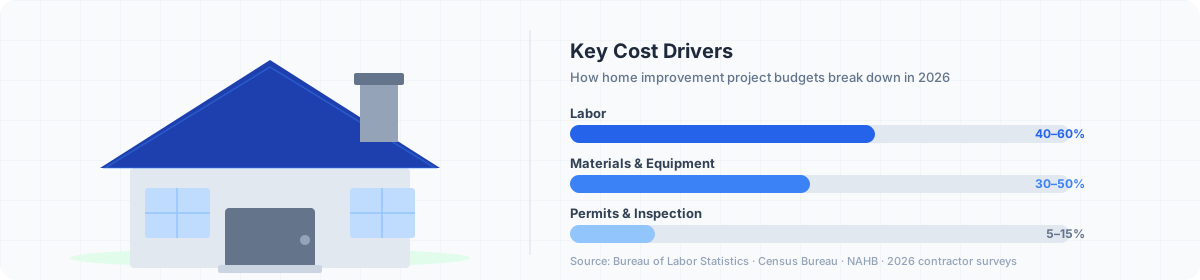
Foundation type (slab vs crawl vs basement) can swing costs by $10,000–$40,000. Structural changes (removing load-bearing walls, moving utilities) add $5,000–$20,000. High-end finishes (granite, hardwood, custom cabinets) add 30–50%. Permit fees vary by state: $500–$3,000 for additions. Labor costs are 40–50% of total in most markets.
3. ROI by Addition Type
Bathroom addition: 50–60% ROI at resale. Bedroom/master suite: 50–65% ROI. Garage (attached): 60–80% ROI. ADU (rental unit): 80–120% ROI with rental income factored. Second story: 60–75% ROI in high-value markets. Sunroom: 40–60% ROI. All ROI figures are national averages — coastal/high-demand markets often see 10–20% higher ROI.
4. Home Addition Cost Per Square Foot (2026)
The most-searched question: 'how much does a home addition cost per square foot?' Answer: $80–$400/sqft depending on type. Bedroom/living space: $90–$175/sqft (national avg $115/sqft). Bathroom addition: $175–$300/sqft (plumbing-intensive). Attached garage: $55–$100/sqft (unfinished interior). Sunroom/3-season room: $100–$200/sqft. ADU/in-law suite: $175–$300/sqft (full kitchen + bath). Second story: $175–$400/sqft (structural upgrades required). A basic 400 sqft bedroom addition at $115/sqft = $46,000. A premium 400 sqft bedroom addition at $175/sqft = $70,000. Per-sqft rates decrease slightly for larger additions because fixed costs (permits, design, mobilization) are spread over more area. Homewyse benchmarks: $95–$155/sqft for a standard bedroom addition in most US markets. Always add 15–20% for contingency — addition projects almost always uncover unexpected issues behind walls or in foundations.
5. Home Addition Cost by Common Dimensions — 12×24, 20×20, 400–1,000 Sq Ft (2026)
These are the most-searched room addition sizes in 2026. Costs below assume standard mid-range finishes for bedroom/living space additions; master suite and ADU figures use higher per-sqft rates due to plumbing requirements.
| Dimension / Size | Sq Ft | Standard Finish | Premium Finish | Common Use |
|---|---|---|---|---|
| 12×16 ft | 192 sqft | $18,000–$28,000 | $28,000–$42,000 | Home office, small bedroom, bump-out |
| 12×24 ft | 288 sqft | $26,000–$40,000 | $40,000–$62,000 | Bedroom, sunroom, 1-car garage |
| 20×20 ft | 400 sqft | $36,000–$55,000 | $55,000–$85,000 | Master bedroom, family room, 2-car garage |
| 400 sqft master suite | 400 sqft | $65,000–$95,000 | $95,000–$140,000 | Master bedroom + en-suite bath (plumbing adds cost) |
| 600 sqft ADU | 600 sqft | $90,000–$135,000 | $135,000–$200,000 | In-law suite, rental ADU (full kitchen + bath) |
| 1,000 sqft addition | 1,000 sqft | $80,000–$130,000 | $130,000–$200,000 | Large family room + bedroom wing; partial 2nd story |
The 20×20 room addition (400 sqft) is the most-searched size — at $115/sqft standard, total cost runs $36,000–$55,000 for bedroom/living space, or $65,000–$95,000 when configured as a master suite with en-suite bath. All figures include permits, framing, insulation, drywall, flooring, and finish work. Add $5,000–$15,000 for HVAC extension and electrical panel upgrade if needed. Always budget a 15–20% contingency.
2026 Cost Reference Table
| Type / Option | Typical Cost Range |
|---|---|
| Master bedroom addition (400 sqft, standard) | $48,000 – $80,000 |
| Bathroom addition (150 sqft) | $22,500 – $45,000 |
| Attached garage — 2-car (480 sqft) | $24,000 – $48,000 |
| Sunroom / 3-season room (200 sqft) | $16,000 – $40,000 |
| ADU / in-law suite (600 sqft) | $90,000 – $180,000 |
| Second story (1,200 sqft) | $210,000 – $480,000 |
Frequently Asked Questions
Home additions cost $80–$400/sqft depending on type and finish level. A 400 sqft bedroom addition averages $48,000–$80,000. A 2-car garage runs $24,000–$48,000. ADUs (accessory dwelling units) cost $90,000–$180,000 for 600 sqft but can generate $1,500–$3,000/month in rental income, typically breaking even in 5–10 years.
Most additions recover 50–80% of cost at resale, making them borderline in pure ROI terms. The value comes from: additional living space for your family, increased home value in tight markets, rental income potential (ADUs), and avoiding moving costs ($20,000–$50,000+). In hot real estate markets, additions often return 75–100% of cost.
Most homeowners use a HELOC (home equity line of credit) at 7–9% variable, or a home equity loan at 7–8% fixed. Cash-out refinance works if your rate is competitive. RenoFi loans (renovation-specific) allow borrowing based on post-renovation value. Avoid personal loans — rates are 10–20% vs 7–9% for equity-based financing.
Yes, always. Home additions require permits in all US jurisdictions. You'll need: a building permit (for structural work), electrical permit (new circuits), plumbing permit (if adding bathrooms/kitchen), and mechanical permit (HVAC extension). Permit costs: $500–$2,500 for a full addition depending on square footage and location. Never proceed without permits — unpermitted additions must be disclosed at sale, often at significant price reductions, and may need to be demolished or retrofitted to code.
A typical 400 sqft room addition takes 3–5 months from permit approval to completion. Timeline: Design and permits: 4–10 weeks. Foundation and framing: 2–4 weeks. Rough-in (electrical, plumbing, HVAC): 2–3 weeks. Insulation and drywall: 1–2 weeks. Finishing (flooring, trim, paint): 2–4 weeks. Complex additions (second story, ADU) can take 6–12 months. Delays are common due to permit timelines, subcontractor scheduling, and material lead times.
By ROI at resale: (1) Master bedroom/bathroom suite: 50–65% ROI — most requested feature by buyers. (2) Kitchen expansion: 60–75% ROI when done with the kitchen remodel. (3) ADU/in-law suite: 50–80% ROI plus rental income potential ($1,500–$3,000/month). (4) Garage addition: 65–75% ROI — high demand in cold climates. (5) Bump-out (kitchen or family room extension): 45–60% ROI at lower total cost. Sunrooms and screened porches have lower ROI (30–50%) but high personal use value.
Adding a full second story costs $150,000–$350,000+ depending on house size, design, and structural complexity. A partial second story (master suite only) runs $75,000–$150,000. The main costs: structural engineer ($2,000–$5,000), roof removal and reconstruction ($15,000–$40,000), staircase ($8,000–$20,000), and all the second-floor finish work. Second-story additions typically require temporary living arrangements ($2,000–$5,000/month for 3–6 months). Compare to building a ground-floor addition ($100–$200/sqft) — second stories cost 20–40% more per sqft due to structural complexity.
It depends on the scope. For a bump-out addition or garage/ADU built at the rear of the property, most homeowners can remain in the home with modest disruption. For larger additions that require opening the roof, tying into the foundation, or major plumbing/electrical work throughout the house, living conditions become very difficult. Plan for: heavy construction noise 7am–5pm weekdays, dust and debris infiltrating living areas (plastic sheeting helps but doesn't fully contain it), utility interruptions (water, electrical) for 1–3 days at a time during rough-in work, and loss of access to exterior doors on the affected side. For second-story additions, most contractors recommend temporary housing for 1–3 months. Budget $2,000–$5,000/month for a rental if you need to move out. Many contractors can phase the work to minimize disruption — discuss this specifically when getting bids.
Home addition costs per square foot in 2026: Basic room addition (bedroom, family room): $100–$200/sqft. Mid-range addition (with bathroom): $150–$300/sqft. High-end addition (kitchen expansion, master suite): $250–$500/sqft. Garage addition: $50–$100/sqft. ADU/in-law suite: $150–$300/sqft. Second-story addition: $200–$400/sqft (most expensive due to structural complexity). National average for all addition types: $140,000 for a 1,000 sqft addition ($140/sqft). Smaller additions (under 200 sqft) cost significantly more per sqft because fixed costs (permits, mobilization, tie-in to existing structure) are spread over fewer square feet.
Buying a new home is often cheaper than a major home addition when you factor in all costs, but it depends on your market and circumstances. Home addition costs: $100,000–$200,000 for a meaningful addition (400+ sqft). Moving costs: realtor commissions (5–6% of sale price = $18,000–$30,000 on a $400K home), closing costs on new home ($8,000–$15,000), moving expenses ($5,000–$15,000), plus the stress of moving. Total moving costs: $30,000–$60,000+. If the home you need costs $100,000 more than your current home, the addition may break even. If you love your neighborhood and the addition meets your needs, staying often wins. Consult a real estate agent to compare the math for your specific market.
Yes — adding livable square footage generally increases home value, though the return varies. The national average: home additions return 50–80% of their cost at resale. A $150,000 addition may add $75,000–$120,000 in market value, depending on location. ADUs (accessory dwelling units) often return the most because they generate rental income in addition to added equity. Second bedrooms and bathrooms added to homes that are deficient in those areas return the highest percentages. Over-building for the neighborhood — adding a 5,000 sqft addition to a 1,500 sqft home in a neighborhood of 2,000 sqft homes — rarely returns full value.
Cost Trends — 2022 to 2026
How costs have changed year over year. Useful for budgeting and understanding market direction.
| Year | Average Cost | Change vs Prior Year |
|---|---|---|
| 2022 | $110,000 | Baseline |
| 2023 | $118,000 | ↑ 7.3% |
| 2024 | $125,000 | ↑ 5.9% |
| 2025 | $132,000 | ↑ 5.6% |
| 2026 | $140,000 | ↑ 6.1% |
National average estimates based on industry surveys and contractor pricing data. Regional costs may vary significantly.
Data Sources
- • Bureau of Labor Statistics (BLS) — Construction wages — State-level general contractor and carpenter labor wage data
- • National Association of Home Builders (NAHB) — Residential addition cost benchmarks and per-sqft averages
- • RSMeans Construction Cost Data — Material and labor cost index by region and project type
- • HomeAdvisor / Angi project cost database — Real project costs from homeowner-submitted contractor quotes
Get Home Addition Quotes + Financing
Most homeowners finance additions with a HELOC (home equity line of credit). Compare rates before hiring a contractor.
Advertising disclosure: links above are paid partnerships. Learn more.
Your Estimate
Low
—
Average
—
High
—
Cost Breakdown
Cost Itemization
| Category | Amount | % |
|---|
Paid partnership · disclosure
Tips Before You Start
- ✓ ADUs (accessory dwelling units) offer the best ROI — rental income pays back in 5–10 years
- ✓ Bump-out additions (under 12 sqft) cost 20–30% less than full additions — no foundation work
- ✓ Second-story additions are the most expensive at $250–$400/sqft but maximize ROI in cities
- ✓ Garage additions recover 60–80% of cost at resale — one of the best home improvement ROI projects
- ✓ Get permits before any work starts — unpermitted additions cause major title issues at resale
How to Finance This Project
Most homeowners finance large projects rather than paying cash. Compare your options:
HELOC
Home Equity Line of Credit. Uses your home equity as collateral. Rates typically 7–9% variable.
- ✓ Lowest interest rates
- ✓ Tax-deductible interest (if used for home improvement)
- ✗ Requires home equity (20%+)
- ✗ Variable rate risk
Personal Loan
Unsecured loan. No home equity needed. Fixed rates typically 8–20% depending on credit score.
- ✓ Fast funding (1–5 days)
- ✓ Fixed monthly payment
- ✓ No collateral required
- ✗ Higher rate than HELOC
Contractor Financing
Many contractors offer financing through GreenSky, Synchrony, or similar. Watch for deferred interest.
- ✓ Often 0% promo period (12–18 months)
- ✓ Convenient, one-stop
- ✗ High rate after promo ends
- ✗ Deferred interest traps
Compare home improvement loan rates
Get pre-qualified in 2 minutes. No impact to your credit score.
Cost by State — 2026
Based on national average pricing adjusted for local labor and material costs.
Alabama
$52,800 – $91,520
$70,400
Alaska
$87,000 – $150,800
$116,000
Arizona
$58,200 – $100,880
$77,600
Arkansas
$49,800 – $86,320
$66,400
California
$88,800 – $153,920
$118,400
Colorado
$67,200 – $116,480
$89,600
Connecticut
$76,800 – $133,120
$102,400
Delaware
$64,800 – $112,320
$86,400
Florida
$111,000 – $192,400
$148,000
Georgia
$57,000 – $98,800
$76,000
↑ Most Expensive States
- 1 Florida $148,000
- 2 Hawaii $134,400
- 3 New York $121,600
- 4 California $118,400
- 5 Alaska $116,000
↓ Least Expensive States
- 1 Mississippi $64,000
- 2 Arkansas $66,400
- 3 West Virginia $66,400
- 4 Kentucky $68,000
- 5 Oklahoma $68,000
Cost in Major US Cities — 2026
City-level estimates based on local labor costs and market conditions. Costs in high-cost metros like NYC and Los Angeles are typically 30–65% above the national average.
| City | Typical Range | Avg Cost |
|---|---|---|
| New York | $105,600 – $171,600 | $132,000 |
| Los Angeles | $101,120 – $164,320 | $126,400 |
| Chicago | $78,080 – $126,880 | $97,600 |
| Houston | $69,120 – $112,320 | $86,400 |
| Phoenix | $65,920 – $107,120 | $82,400 |
| Philadelphia | $75,520 – $122,720 | $94,400 |
| San Antonio | $67,200 – $109,200 | $84,000 |
| San Diego | $92,800 – $150,800 | $116,000 |
| Dallas | $71,680 – $116,480 | $89,600 |
| Austin | $73,600 – $119,600 | $92,000 |
Estimates derived from national average adjusted by metro-area labor and material cost indices. Actual quotes from local contractors may vary 20–35%.
Related Guides
View all guides →Now that you have an estimate — get free quotes from pre-screened local contractors. Most homeowners save 15–25% by comparing 3 bids.