IVF Cost Calculator 2026
Calculate 2026 IVF costs by cycles, add-ons (ICSI, PGT genetic testing, donor eggs), and your state's insurance mandate status.
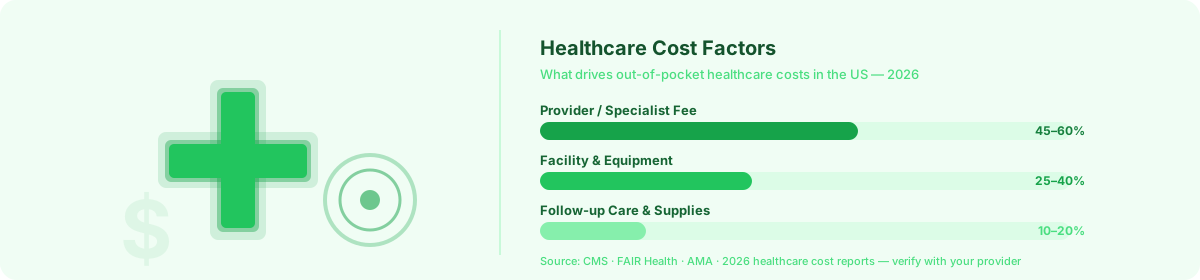
Enter Your Details
What Affects the Cost?
1. Base IVF Cycle Cost
A standard IVF cycle costs $10,000–$18,000 at most clinics. This typically includes egg retrieval, embryo creation, fresh embryo transfer, and ultrasound monitoring. It DOES NOT include fertility medications ($3,000–$8,000/cycle), genetic testing ($2,500–$6,000), or frozen embryo transfer ($3,000–$5,000).
2. Add-Ons That Drive Cost
ICSI (sperm injection): $1,000–$2,500 extra. PGT-A (preimplantation genetic testing): $2,500–$6,000 for testing + $250–$500 per embryo biopsied. Frozen embryo transfer (FET): $3,000–$5,000. Donor eggs: $25,000–$50,000 additional (fresh cycle with donor).
3. IVF Insurance Coverage by State — 2026 Mandate Table
| State | Plans Covered | Benefit Cap | Est. Out-of-Pocket |
|---|---|---|---|
| Illinois | All plans | Unlimited | $0 – $2,000 |
| Massachusetts | All plans | 6 retrievals / 3 FET | $500 – $3,000 |
| New Jersey | All plans | 4 retrievals / 3 FET | $500 – $3,000 |
| New York | Large group plans | 3 retrievals / 3 FET | $1,000 – $5,000 |
| Connecticut | All plans | Unlimited | $0 – $2,000 |
| Maryland | HMO / PPO plans | Unlimited | $500 – $3,000 |
| Rhode Island | All plans | 3 cycles | $500 – $3,000 |
| Delaware | All plans | 3 cycles | $500 – $3,000 |
| Colorado | All plans | 3 cycles | $500 – $3,000 |
| Washington | All plans | 3 cycles | $1,000 – $4,000 |
| New Hampshire | All plans | 3 cycles | $500 – $3,000 |
| Montana | All plans | 2 cycles | $1,000 – $4,000 |
| Arkansas | All plans | $15,000 lifetime | $1,000 – $5,000 |
| West Virginia | State employee plans | Unlimited | $0 – $1,000 |
| Hawaii | All plans | 1 cycle | $2,000 – $6,000 |
Mandate scope varies by employer size and plan type. Texas mandates coverage for employers with 2–50 employees only. California mandates IUI but not IVF. Always verify your specific plan. Sources: RESOLVE, NCSL (2026).
4. IVF Cost With Insurance vs. Without Insurance
Without insurance (most states): $15,000–$25,000 per cycle including medications. With insurance mandate (IL, MA, NJ, NY, CT): $500–$5,000 out-of-pocket after insurance. With employer fertility benefit (Progyny, Carrot, Maven): $0–$3,000 per cycle — about 40% of Fortune 500 companies offer this. Shared-risk programs (guarantee refund if no live birth): $25,000–$35,000 upfront covers 2–3 cycles with 70% refund if unsuccessful. Mini-IVF (milder stimulation): $5,000–$8,000/cycle, best for low ovarian reserve or those sensitive to medications. Military TRICARE: does not cover IVF but covers fertility diagnosis and treatment up to IUI.
5. IVF vs. Adoption: Total Cost Comparison (2026)
IVF total cost (3 cycles, no insurance): $45,000–$75,000 with realistic success rates of 60–70% cumulative for patients under 38. Domestic infant adoption: $25,000–$55,000 (home study $1,500–$3,500, agency fees $20,000–$40,000, legal fees $2,500–$5,000, birth mother expenses $5,000–$15,000). Foster-to-adopt: $0–$5,000 (most costs covered by state — home study, training, legal). International adoption: $20,000–$50,000 (varies dramatically by country — current programs include Ethiopia, South Korea, Colombia, China for special needs). Embryo adoption: $5,000–$15,000 (adopting frozen embryos from other IVF patients; very limited supply). Timeline comparison: IVF typically takes 2–18 months. Domestic infant adoption: 1–5 years wait for a newborn. Foster-to-adopt: 1–3 years. International adoption: 2–5+ years depending on country. Key consideration: IVF produces a genetic child for most patients. Adoption creates a family through a different path. Both are deeply personal decisions that go far beyond cost comparisons. Many families pursue both sequentially — attempting IVF first, then adopting.
2026 Cost Reference Table
| Type / Option | Typical Cost Range |
|---|---|
| Base IVF cycle (egg retrieval + transfer) | $10,000 – $18,000 |
| Fertility medications (per cycle) | $3,000 – $8,000 |
| ICSI add-on | $1,000 – $2,500 |
| PGT-A genetic testing | $2,500 – $6,000 |
| Frozen embryo transfer (FET) | $3,000 – $5,000 |
| Donor egg IVF (fresh donor) | $25,000 – $50,000 |
Frequently Asked Questions
A single IVF cycle costs $10,000–$18,000 for the procedure, plus $3,000–$8,000 for medications — totaling $13,000–$26,000 per cycle all-in. Most patients need 2–3 cycles. In states with insurance mandates, out-of-pocket costs can be dramatically lower.
19 states mandate some form of infertility insurance coverage. In mandate states, IVF is often covered after meeting your deductible. Outside mandate states, most employer plans exclude IVF. HSA/FSA funds can be used for IVF expenses.
Per the CDC's 2023 ART data: women under 35 have a 50–55% live birth rate per egg retrieval. Ages 35–37: 40–45%. Ages 38–40: 25–35%. Ages 41–42: 15–20%. Over 42: 5–10% (own eggs). Donor eggs achieve 45–50% regardless of recipient age.
IVF medications (gonadotropins/injectable hormones) cost $3,000–$8,000 per cycle and are often NOT included in the base cycle price quoted by clinics. Generic injectable FSH (follicle-stimulating hormone) runs $2,000–$4,000. Lupron, progesterone, and estrogen add $500–$1,500. Specialty pharmacies (Mandell's, MDR, Freedom Fertility) are typically 20–40% cheaper than retail pharmacies. Ask your clinic for preferred pharmacy partners. Some manufacturers offer compassionate care programs for income-qualifying patients.
IUI (intrauterine insemination) is much less expensive than IVF: $300–$1,000 per cycle without medications, or $1,500–$4,000 with injectable medications. IUI is typically tried 2–4 cycles before IVF. Success rate per IUI cycle: 10–20% for women under 35 (vs 40–55% for IVF). For couples with unexplained infertility or mild male factor, IUI is often recommended first due to lower cost. Total IUI treatment (3 cycles with meds): $4,500–$12,000 vs. IVF at $13,000–$26,000+ per cycle.
Most patients require 2–3 IVF cycles to achieve a live birth. Per the SART 2023 data, cumulative live birth rates for women under 35 after multiple cycles: 1 cycle: 50–55%, 2 cycles: 70–75%, 3 cycles: 80–85%. Older patients have lower per-cycle rates. Frozen embryo transfers (FETs) from a single egg retrieval can attempt multiple transfers without the full cost of another retrieval cycle. Budgeting for 2–3 cycles is advisable — plan for $30,000–$60,000 total.
IVF financing options: (1) Clinic payment plans — many clinics offer 0% financing for 12–18 months. (2) Multi-cycle discount packages — 2–3 cycle bundles at $25,000–$40,000 (vs $26,000+ per cycle) with some refund guarantees. (3) Fertility-specific loans — companies like Future Family, CapexMD offer IVF loans at 7–15% APR. (4) HSA/FSA — IVF is a qualified medical expense; contribute max ($3,850/$7,750 in 2026). (5) Employer benefits — 25% of Fortune 500 companies now offer IVF benefits. Check your HR department — this can save $10,000–$25,000.
Domestic infant adoption costs $25,000–$50,000 total (agency fees, legal, home study). Foster-to-adopt costs $0–$5,000. International adoption: $30,000–$60,000. IVF total costs (2–3 cycles, all-in): $30,000–$70,000. Without insurance or employer benefits, costs are comparable. Key differences: IVF success is not guaranteed (you may need 3+ cycles); adoption has different emotional processes and timelines. Some couples do both. Federal adoption tax credit: $15,950 (2026). IVF has no similar federal credit, though medical expense deduction may apply if costs exceed 7.5% of AGI.
For many couples with infertility, yes — but it depends on success rates, alternatives tried, and financial situation. IVF success rates: ~40–50% per cycle for women under 35; ~25–35% for ages 35–37; ~15–20% for ages 38–40; under 10% over 42 using own eggs. Most couples need 2–3 cycles. Multiple cycles with donor eggs can cost $50,000–$80,000 total but achieve higher success rates. Consider insurance mandates, grants (BabyQuest, CNY Fertility), and shared-risk programs to reduce financial risk.
As of 2026, 21 states have infertility insurance mandates, but coverage varies widely. States with the strongest IVF mandates (covering multiple cycles): Illinois, New York, Massachusetts, New Jersey, Maryland, Connecticut, Rhode Island, Montana. States with partial mandates (diagnosis coverage but limited treatment): Texas, California, Louisiana. States with no mandate: Florida, Georgia, Arizona, and most Southern states. Always verify your specific plan — employer self-insured plans may be exempt from state mandates under ERISA federal law.
Find Fertility Clinics & Financing Options
SART-member clinics publish their live birth rates — always compare success rates alongside pricing.
Advertising disclosure: links above are paid partnerships. Learn more.
Your Estimate
Low
—
Average
—
High
—
Cost Breakdown
Cost Itemization
| Category | Amount | % |
|---|
Paid partnership · disclosure
Tips Before You Start
- ✓ 19 states mandate insurance coverage for IVF — check if your state is one of them
- ✓ Most patients need 2–3 cycles — plan financially for at least 2
- ✓ Shared-risk / refund programs offer 70–80% refund if no live birth
- ✓ Mini-IVF (lower drug doses) costs $5,000–$8,000/cycle for certain candidates
- ✓ Fertility medication costs $3,000–$8,000/cycle and are often NOT included in base price
How to Finance This Project
Most homeowners finance large projects rather than paying cash. Compare your options:
HELOC
Home Equity Line of Credit. Uses your home equity as collateral. Rates typically 7–9% variable.
- ✓ Lowest interest rates
- ✓ Tax-deductible interest (if used for home improvement)
- ✗ Requires home equity (20%+)
- ✗ Variable rate risk
Personal Loan
Unsecured loan. No home equity needed. Fixed rates typically 8–20% depending on credit score.
- ✓ Fast funding (1–5 days)
- ✓ Fixed monthly payment
- ✓ No collateral required
- ✗ Higher rate than HELOC
Contractor Financing
Many contractors offer financing through GreenSky, Synchrony, or similar. Watch for deferred interest.
- ✓ Often 0% promo period (12–18 months)
- ✓ Convenient, one-stop
- ✗ High rate after promo ends
- ✗ Deferred interest traps
Compare home improvement loan rates
Get pre-qualified in 2 minutes. No impact to your credit score.
Cost by State — 2026
Based on national average pricing adjusted for local labor and material costs.
Alabama
$9,900 – $17,160
$13,200
Alaska
$16,313 – $28,275
$21,750
Arizona
$10,913 – $18,915
$14,550
Arkansas
$9,338 – $16,185
$12,450
California
$16,650 – $28,860
$22,200
Colorado
$12,600 – $21,840
$16,800
Connecticut
$14,400 – $24,960
$19,200
Delaware
$12,150 – $21,060
$16,200
Florida
$20,813 – $36,075
$27,750
Georgia
$10,688 – $18,525
$14,250
↑ Most Expensive States
- 1 Florida $27,750
- 2 Hawaii $25,200
- 3 New York $22,800
- 4 California $22,200
- 5 Alaska $21,750
↓ Least Expensive States
- 1 Mississippi $12,000
- 2 Arkansas $12,450
- 3 West Virginia $12,450
- 4 Kentucky $12,750
- 5 Oklahoma $12,750
Cost in Major US Cities — 2026
City-level estimates based on local labor costs and market conditions. Costs in high-cost metros like NYC and Los Angeles are typically 30–65% above the national average.
| City | Typical Range | Avg Cost |
|---|---|---|
| New York | $19,800 – $32,175 | $24,750 |
| Los Angeles | $18,960 – $30,810 | $23,700 |
| Chicago | $14,640 – $23,790 | $18,300 |
| Houston | $12,960 – $21,060 | $16,200 |
| Phoenix | $12,360 – $20,085 | $15,450 |
| Philadelphia | $14,160 – $23,010 | $17,700 |
| San Antonio | $12,600 – $20,475 | $15,750 |
| San Diego | $17,400 – $28,275 | $21,750 |
| Dallas | $13,440 – $21,840 | $16,800 |
| Austin | $13,800 – $22,425 | $17,250 |
Estimates derived from national average adjusted by metro-area labor and material cost indices. Actual quotes from local contractors may vary 20–35%.