Moving Cost Calculator 2026
Calculate 2026 moving costs for local and long-distance moves by home size, move distance, and service level (full-service vs. labor-only).
Enter Your Details
What Affects the Cost?
1. Local Moves (Under 100 Miles)
Local moves are priced hourly: $100–$200/hour for a 2-person crew + truck. A 1-bedroom apartment (3–4 hours) costs $400–$800. A 3-bedroom house (6–8 hours) costs $800–$2,000. Hourly rates vary by city — NYC and SF crews charge $150–$250/hour; Midwest cities $80–$140/hour.
2. Long-Distance Moves (100+ Miles)
Interstate moves are priced by weight and distance. Average cost: 1-bedroom = $1,500–$3,500; 2–3 bedroom = $3,500–$7,500; 4+ bedroom = $6,000–$12,000+. Cross-country moves (e.g., NY to CA) for a 3-bedroom house typically cost $7,000–$12,000 for full-service. Fuel surcharges add 10–20%.
3. DIY vs. Full-Service
Truck rental (U-Haul, Penske): $200–$400 for local; $1,500–$3,000 for long-distance. Portable container (PODS): $1,500–$4,500 for long-distance. Labor-only movers (load/unload only): $200–$600 for 2 hours. Full-service movers include packing, loading, transport, and unloading.
4. Moving Cost by Home Size and Distance — 2026
Full-service mover estimates (licensed carriers, biweekly pricing). DIY truck rental costs approximately 35% of full-service; labor-only movers cost 55%:
| Home Size | Local (<50 mi) | Regional (50–500 mi) | Long-Dist (500–1,500 mi) | Cross-Country (1,500+ mi) | DIY Truck (local) |
|---|---|---|---|---|---|
| Studio / 1BR | $500–$900 | $1,500–$2,500 | $2,500–$4,000 | $3,500–$5,500 | $200–$350 |
| 2–3 Bedroom | $900–$2,000 | $3,000–$5,500 | $5,000–$8,500 | $7,500–$12,000 | $350–$550 |
| 4+ Bedroom | $1,800–$3,500 | $5,000–$8,500 | $8,000–$13,500 | $11,000–$18,000 | $500–$750 |
Full-service includes loading, transport, and unloading. Add 30–50% for packing services. PODS portable containers for long-distance moves cost $1,500–$4,500 — you load/unload yourself. Prices peak June–August and on weekends/month-end — book mid-week, mid-month, or off-season to save 15–25%. Always verify movers at FMCSA.dot.gov and get at least 3 written quotes before booking.
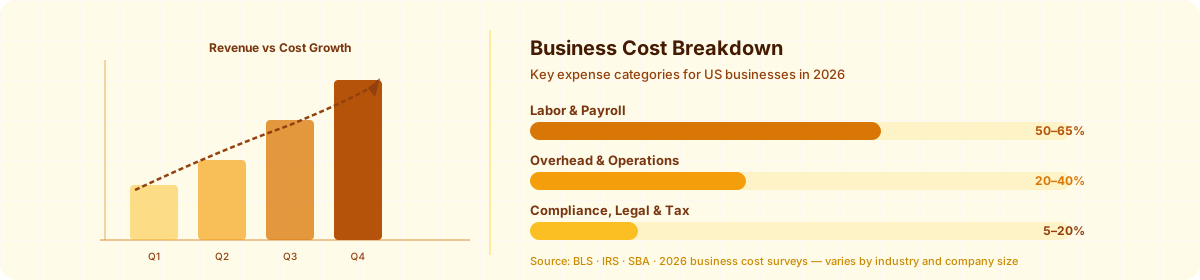
Moving Cost Breakdown: Where Your Money Goes
Based on national average project cost. Your breakdown may vary by material choice and contractor.
| Cost Category | % of Total | Note |
|---|---|---|
| Transportation / Fuel | | Truck, driver, fuel, tolls, and mileage charges |
| Labor (loading/unloading) | | Moving crew wages — typically 2–4 workers |
| Packing Materials | | Boxes, tape, padding, wardrobe boxes |
| Insurance & Liability | | Released value vs. full-value protection |
| Admin & Overhead | | Scheduling, insurance, dispatch, company overhead |
2026 Cost Reference Table
| Type / Option | Typical Cost Range |
|---|---|
| Studio/1BR — local (under 50 miles) | $400 – $900 |
| 2–3BR — local (under 50 miles) | $800 – $2,000 |
| 4+BR — local | $1,500 – $3,500 |
| 1BR — long distance (500–1,000 miles) | $2,000 – $4,500 |
| 3BR — cross-country (2,000+ miles) | $7,000 – $12,000 |
| Moving container (PODS) — long distance | $1,500 – $4,500 |
Frequently Asked Questions
Local moves (under 100 miles) cost $400–$2,500 for most households. A studio apartment averages $400–$800; a 2–3 bedroom home averages $1,000–$2,000. Movers charge $100–$200/hour for a 2-person crew. Weekend and month-end moves typically add a 15–25% surcharge.
Long-distance moves average $3,000–$8,000 for a 2–3 bedroom home moving 500–2,000 miles. Cross-country moves (NY to CA) for a fully-furnished 3-bedroom house cost $8,000–$15,000. Cost is based on shipment weight and mileage, plus fuel and accessorial charges.
Portable containers (PODS, U-Pack) cost $1,500–$4,500 for long-distance moves — roughly 30–50% less than full-service movers. You load it yourself, PODS delivers it. If you can do the physical labor, containers are the best value for moves over 300 miles.
Get at least 3 in-home or video estimates (not phone estimates) from licensed movers. Verify the mover at FMCSA.dot.gov (licensed interstate movers have a USDOT number). Red flags: demanding large cash deposits upfront, not providing a written estimate, quoting extremely low prices (then holding your belongings for more money — 'hostage loads'). Always get a binding estimate, not a non-binding one. Check reviews on Google, BBB, and AMSA ProMover directory.
Cheapest options for long-distance moves: (1) Rental truck (U-Haul, Penske, Budget): $1,500–$3,000 one-way for a large truck — you drive and load yourself. (2) Portable container (PODS, U-Pack ReloCube): $1,500–$4,500 — you load, they ship. (3) Freight shipping: you pack tight and ship on a freight trailer by cubic feet — best for studio apartments under 1,000 lbs. (4) Sell and rebuy: for modest belongings, sometimes selling furniture and rebuying at the destination is cheaper than shipping.
Moving costs peak in summer (May–August), on weekends, and at the beginning/end of the month. Save 15–30% by: moving mid-week (Tuesday–Thursday), mid-month (8th–22nd), and off-season (October–April). Booking 4–8 weeks in advance locks in lower rates before peak-season price hikes. Some movers offer last-minute discounts to fill open slots — if you're flexible, call 1–2 days before you want to move.
Tipping movers is customary but not required. Standard tips: $20–$50 per mover for a local move; $50–$100 per mover for a long-distance or full-day move. For exceptional service on a large or complex move, $100+ per mover is appropriate. Tip in cash at the end of the move, per person. Providing water, snacks, and lunch also goes a long way. Don't withhold tip if the company itself caused issues — tip based on the individual crew's effort.
Standard 'released value' coverage (included free): reimburses only $0.60 per pound per item — a 50-lb flat screen TV gets $30 if damaged. This is almost worthless. Full-value protection (add-on): the mover must repair, replace, or pay current market value for damaged items — typically costs $0.50–$1.00 per $100 of declared value. Your homeowners/renters insurance may cover items in transit — check your policy. For valuable items (art, jewelry, electronics), use a specialized moving floater policy or carry them yourself.
Local movers typically charge $80–$150/hour for a 2-person crew, or $120–$200/hour for a 3-person crew. Most companies have a minimum charge of 2–3 hours. A typical 2-bedroom local move takes 4–6 hours total = $400–$1,200 in labor. Weekend and summer rates often run 15–25% higher. Long-distance moves are usually priced by weight and mileage rather than hourly rates.
Common hidden moving costs: (1) Fuel surcharge — 5–15% of total, (2) Stair carry charges — $50–$75 per flight above ground floor, (3) Long carry fees if truck can't park close — $75–$150, (4) Elevator fees — $75–$150, (5) Packing materials — $100–$400, (6) Full-value protection insurance — 1–2% of declared value, (7) Storage-in-transit if closing dates don't align — $150–$300/month, (8) Piano or safe moving surcharge — $150–$500. Get all fees itemized in writing before signing.
Book 4–8 weeks ahead for summer (May–September) moves — peak season when capacity fills fast. For fall/winter off-peak moves, 2–4 weeks is usually sufficient. For last-minute moves, you may find availability but often at premium rates. Interstate moves on weekends book fastest. Get binding written estimates from at least 3 licensed movers before committing — verbal quotes are not binding under FMCSA regulations.
Cost Trends — 2022 to 2026
How costs have changed year over year. Useful for budgeting and understanding market direction.
| Year | Average Cost | Change vs Prior Year |
|---|---|---|
| 2022 | $1,150 | Baseline |
| 2023 | $1,280 | ↑ 11.3% |
| 2024 | $1,360 | ↑ 6.3% |
| 2025 | $1,430 | ↑ 5.1% |
| 2026 | $1,500 | ↑ 4.9% |
National average estimates based on industry surveys and contractor pricing data. Regional costs may vary significantly.
Data Sources
- • American Moving & Storage Association (AMSA) — Industry average cost surveys and mover licensing data
- • FMCSA — Protect Your Move — Interstate mover licensing, regulations, and consumer protection
- • Bureau of Labor Statistics (BLS) — CPI Transportation — Year-over-year price change data for moving and freight services
- • HireAHelper Market Data — Real quote data from labor-only movers across all 50 states
Compare Moving Company Quotes
Get 3+ quotes from licensed moving companies — prices vary 30–50% between movers for the same move.
Advertising disclosure: links above are paid partnerships. Learn more.
Your Estimate
Low
—
Average
—
High
—
Cost Breakdown
Cost Itemization
| Category | Amount | % |
|---|
Paid partnership · disclosure
Tips Before You Start
- ✓ Get at least 3 quotes from licensed movers — prices vary 30–50% for the same move
- ✓ Moving mid-week and mid-month saves 15–25% vs. peak dates (Fridays, month-end)
- ✓ Full-service packing adds 30–50% to your total — pack non-fragile items yourself
- ✓ Renting a portable storage container (PODS) can save 30–40% vs. full-service moving
- ✓ Check FMCSA.dot.gov to verify any interstate mover is licensed and bonded
Cost by State — 2026
Based on national average pricing adjusted for local labor and material costs.
Alabama
$924 – $1,602
$1,232
Alaska
$1,523 – $2,639
$2,030
Arizona
$1,019 – $1,765
$1,358
Arkansas
$872 – $1,511
$1,162
California
$1,554 – $2,694
$2,072
Colorado
$1,176 – $2,038
$1,568
Connecticut
$1,344 – $2,330
$1,792
Delaware
$1,134 – $1,966
$1,512
Florida
$1,943 – $3,367
$2,590
Georgia
$998 – $1,729
$1,330
↑ Most Expensive States
- 1 Florida $2,590
- 2 Hawaii $2,352
- 3 New York $2,128
- 4 California $2,072
- 5 Alaska $2,030
↓ Least Expensive States
- 1 Mississippi $1,120
- 2 Arkansas $1,162
- 3 West Virginia $1,162
- 4 Kentucky $1,190
- 5 Oklahoma $1,190
Cost in Major US Cities — 2026
City-level estimates based on local labor costs and market conditions. Costs in high-cost metros like NYC and Los Angeles are typically 30–65% above the national average.
| City | Typical Range | Avg Cost |
|---|---|---|
| New York | $1,848 – $3,003 | $2,310 |
| Los Angeles | $1,770 – $2,876 | $2,212 |
| Chicago | $1,366 – $2,220 | $1,708 |
| Houston | $1,210 – $1,966 | $1,512 |
| Phoenix | $1,154 – $1,875 | $1,442 |
| Philadelphia | $1,322 – $2,148 | $1,652 |
| San Antonio | $1,176 – $1,911 | $1,470 |
| San Diego | $1,624 – $2,639 | $2,030 |
| Dallas | $1,254 – $2,038 | $1,568 |
| Austin | $1,288 – $2,093 | $1,610 |
Estimates derived from national average adjusted by metro-area labor and material cost indices. Actual quotes from local contractors may vary 20–35%.