Rhinoplasty (Nose Job) Cost Calculator 2026
Calculate 2026 rhinoplasty costs — primary, revision, or functional rhinoplasty — adjusted for surgeon tier and city market.
Enter Your Details
What Affects the Cost?
1. Primary vs. Revision Rhinoplasty
Primary rhinoplasty (first-time procedure) costs $6,000–$12,000. Revision rhinoplasty (correcting a previous nose job) costs $8,000–$18,000+ due to scar tissue and complexity. Tip refinement only (minor procedure) costs $4,000–$8,000.
2. Surgeon & Facility Fees
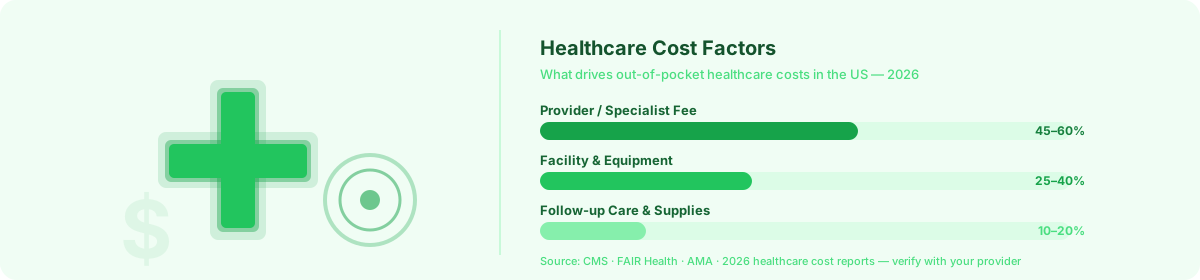
Rhinoplasty costs include: surgeon fee (50–60% of total), anesthesia fee ($1,000–$2,500), facility/operating room fee ($1,500–$3,500), pre-op tests and post-op care ($500–$1,500). Top-tier surgeons in NYC or Beverly Hills charge 2–3x more than their suburban counterparts.
3. Open vs. Closed Technique
Open rhinoplasty (small incision under the nose) allows maximum access and is used for complex reshaping. Closed rhinoplasty (incisions inside nostrils) leaves no visible scarring and has faster recovery. Cost difference is minimal — technique choice is based on your anatomy and goals, not cost.
2026 Cost Reference Table
| Type / Option | Typical Cost Range |
|---|---|
| Tip refinement only (minor) | $4,000 – $8,000 |
| Primary rhinoplasty | $6,000 – $12,000 |
| Revision rhinoplasty | $8,000 – $18,000+ |
| Non-surgical (filler) rhinoplasty | $800 – $2,000 |
| Septoplasty (functional, insurance may cover) | $5,000 – $10,000 |
Frequently Asked Questions
The national average rhinoplasty cost is $9,500 for a primary procedure with a board-certified surgeon. Costs range from $6,000 with a less experienced surgeon to $18,000+ with top facial plastic surgeons in major cities. Revision rhinoplasty costs 30–50% more due to complexity.
Insurance does not cover cosmetic rhinoplasty. However, if the nose job includes a septoplasty to correct a deviated septum that impairs breathing, that functional component may be partially covered by insurance. You'd pay for the cosmetic portion out-of-pocket.
Rhinoplasty recovery timeline: Week 1: Splint on nose, significant swelling and bruising. Most people stay home. Week 2: Splint removed, bruising fades to yellow. Presentable in public for most patients. Week 3–4: Return to desk work, light activities. Weeks 6–8: Resume exercise, most activities. 6 months: ~80% of final result visible (tip swelling resolves). 12–18 months: Final result fully established. The tip typically takes the longest to refine — do not judge results until 12 months post-surgery.
Rhinoplasty changes the external appearance of the nose (reducing a bump, refining the tip, changing width). It's cosmetic and not covered by insurance. Septoplasty corrects a deviated septum (the internal cartilage that divides the nasal passages) to improve breathing. It's medical and may be covered by insurance when medically necessary. A combined procedure ('septorhinoplasty') addresses both form and function simultaneously — the surgical approach is similar and recovery is the same. If you have both cosmetic and breathing concerns, combining procedures saves one recovery period.
Key criteria for choosing a rhinoplasty surgeon: (1) Board certification: Look for board-certified plastic surgeons (ABPS) or facial plastic surgeons (ABFPRS). Do NOT get rhinoplasty from a general ENT or non-specialist. (2) Specialization: Rhinoplasty should be a significant portion (30%+) of their practice. (3) Portfolio: Review 50+ before/after photos. Look for patients with similar anatomy to yours. (4) Revision rate: Ask what % of their patients seek revision (industry average is 5–15%; skilled surgeons 3–7%). (5) Consultation: A 1-hour consultation with morphing software to discuss goals. Red flags: high-pressure sales, very low prices ($3,000–$4,000 for primary rhinoplasty), or non-MD procedures.
Patient satisfaction rates for rhinoplasty are 83–87% when expectations are realistic. When it's worth it: clear functional or aesthetic concern, results will meaningfully improve confidence, you've researched surgeons thoroughly, and you understand the long recovery. When it may not be worth it: if the concern is minor (others don't notice it), if you're under 18 (nose not fully developed), or if the goal is to please someone else. At $9,000–$15,000 all-in, it's one of the more expensive cosmetic procedures but also one of the most transformative when well-executed.
Rhinoplasty results are permanent — the structural changes made to bone and cartilage are not reversible without revision surgery. However, the nose continues to age naturally: tip cartilages gradually drop over decades, skin continues to change with age, and the overall nose may appear slightly longer 20–30 years post-surgery due to gravity. Most patients consider rhinoplasty results permanent for practical purposes. The healing and final result timeline: visible swelling resolves by 3–6 months, subtle refinement continues for 12–18 months, final result fully established at 18 months post-op. Trauma, aggressive sports, or accidents can change results after surgery — protective equipment is recommended for contact sports.
Revision rhinoplasty corrects unsatisfactory results from a previous nose surgery — addressing asymmetry, breathing problems, collapse, over-reduction, or cosmetic concerns not achieved in the primary procedure. Cost: $10,000–$20,000+ with an experienced revision specialist. Revision rhinoplasty is significantly more complex than primary surgery: scar tissue makes dissection harder, available cartilage is reduced (rib cartilage grafts often needed at $2,000–$3,000 extra), and achieving predictable results is more difficult. Revision rate: industry average is 5–15% of rhinoplasties; skilled surgeons have 3–7% revision rates. The most common reasons for revision: over-resection of dorsal hump (resulting in scooped appearance), tip asymmetry or weakness, and breathing issues from previous surgery. If considering revision, see a surgeon who specializes specifically in revision cases, not just primary rhinoplasty.
Cost Trends — 2022 to 2026
How costs have changed year over year. Useful for budgeting and understanding market direction.
| Year | Average Cost | Change vs Prior Year |
|---|---|---|
| 2022 | $6,500 | Baseline |
| 2023 | $6,900 | ↑ 6.2% |
| 2024 | $7,200 | ↑ 4.3% |
| 2025 | $7,600 | ↑ 5.6% |
| 2026 | $8,000 | ↑ 5.3% |
National average estimates based on industry surveys and contractor pricing data. Regional costs may vary significantly.
Data Sources
- • American Society of Plastic Surgeons (ASPS) — Annual plastic surgery statistics including rhinoplasty costs and volume
- • American Society for Aesthetic Plastic Surgery (ASAPS) — Cosmetic surgery fee surveys and regional pricing data
- • RealSelf — Rhinoplasty Cost Data — Patient-reported procedure costs and satisfaction data
- • Bureau of Labor Statistics (BLS) — Surgeon compensation and anesthesiology wage data by state
Research Rhinoplasty Surgeons & Pricing
RealSelf has 100,000+ rhinoplasty reviews and before/after photos with cost information.
Advertising disclosure: links above are paid partnerships. Learn more.
Your Estimate
Low
—
Average
—
High
—
Cost Breakdown
Cost Itemization
| Category | Amount | % |
|---|
Paid partnership · disclosure
Tips Before You Start
- ✓ Board-certified plastic surgeons (ABPS) or facial plastic surgeons (ABFPRS) only
- ✓ Revision rhinoplasty costs 30–50% more than primary — choose your surgeon carefully
- ✓ Septoplasty (for breathing) may be covered by insurance separately from cosmetic component
- ✓ Plan for 1–2 weeks off work and 4–6 weeks before appearing in public
- ✓ Full results take 12–18 months as swelling resolves gradually
How to Finance This Project
Most homeowners finance large projects rather than paying cash. Compare your options:
HELOC
Home Equity Line of Credit. Uses your home equity as collateral. Rates typically 7–9% variable.
- ✓ Lowest interest rates
- ✓ Tax-deductible interest (if used for home improvement)
- ✗ Requires home equity (20%+)
- ✗ Variable rate risk
Personal Loan
Unsecured loan. No home equity needed. Fixed rates typically 8–20% depending on credit score.
- ✓ Fast funding (1–5 days)
- ✓ Fixed monthly payment
- ✓ No collateral required
- ✗ Higher rate than HELOC
Contractor Financing
Many contractors offer financing through GreenSky, Synchrony, or similar. Watch for deferred interest.
- ✓ Often 0% promo period (12–18 months)
- ✓ Convenient, one-stop
- ✗ High rate after promo ends
- ✗ Deferred interest traps
Compare home improvement loan rates
Get pre-qualified in 2 minutes. No impact to your credit score.
Cost by State — 2026
Based on national average pricing adjusted for local labor and material costs.
Alabama
$6,270 – $10,868
$8,360
Alaska
$10,331 – $17,908
$13,775
Arizona
$6,911 – $11,980
$9,215
Arkansas
$5,914 – $10,251
$7,885
California
$10,545 – $18,278
$14,060
Colorado
$7,980 – $13,832
$10,640
Connecticut
$9,120 – $15,808
$12,160
Delaware
$7,695 – $13,338
$10,260
Florida
$13,181 – $22,848
$17,575
Georgia
$6,769 – $11,733
$9,025
↑ Most Expensive States
- 1 Florida $17,575
- 2 Hawaii $15,960
- 3 New York $14,440
- 4 California $14,060
- 5 Alaska $13,775
↓ Least Expensive States
- 1 Mississippi $7,600
- 2 Arkansas $7,885
- 3 West Virginia $7,885
- 4 Kentucky $8,075
- 5 Oklahoma $8,075
Cost in Major US Cities — 2026
City-level estimates based on local labor costs and market conditions. Costs in high-cost metros like NYC and Los Angeles are typically 30–65% above the national average.
| City | Typical Range | Avg Cost |
|---|---|---|
| New York | $12,540 – $20,378 | $15,675 |
| Los Angeles | $12,008 – $19,513 | $15,010 |
| Chicago | $9,272 – $15,067 | $11,590 |
| Houston | $8,208 – $13,338 | $10,260 |
| Phoenix | $7,828 – $12,721 | $9,785 |
| Philadelphia | $8,968 – $14,573 | $11,210 |
| San Antonio | $7,980 – $12,968 | $9,975 |
| San Diego | $11,020 – $17,908 | $13,775 |
| Dallas | $8,512 – $13,832 | $10,640 |
| Austin | $8,740 – $14,203 | $10,925 |
Estimates derived from national average adjusted by metro-area labor and material cost indices. Actual quotes from local contractors may vary 20–35%.